Notable green buildings in the region
The Washington, DC area is a living catalogue of sustainable design. Rather than a ranking, this is a tour of the types of landmark projects that define green building here — and what each one teaches.
The net-zero pioneers
Some of the region’s most influential buildings set out to produce as much energy as they use over a year. Achieving that in a humid Mid-Atlantic climate is genuinely difficult, and the projects that manage it — often schools, nature centers and headquarters buildings — become proof that net-zero is possible at scale, not just in theory. They tend to combine an extremely efficient envelope, careful daylighting, ground-source or high-efficiency heat pumps, and a large rooftop solar array. The most rigorous pursue standards as demanding as the Living Building Challenge, which asks buildings to be net-positive across energy, water and materials.
The deep-energy retrofits
Greater Washington is an old, built-out region, so some of the most important sustainability work is not new construction at all — it is the ambitious renovation of buildings that already exist. Reusing structure avoids enormous embodied-carbon emissions, and a deep retrofit — new envelope, new systems, new controls — can cut a historic building’s energy use by half or more. These projects prove that the greenest building is often the one already standing, upgraded to modern performance.
The public and institutional leaders
Because the federal government, universities and local jurisdictions build so much here, the public sector has an outsized influence on regional practice. Federal properties managed by the General Services Administration include some of the most sustainable large buildings in the country, and their standards ripple outward to the private firms that design and construct them. Public schools and libraries pursuing high-performance targets bring green building into everyday community life.
The healthy workplaces
A wave of commercial and institutional interiors in the region has focused on the people inside — abundant daylight, excellent ventilation, low-emitting materials and biophilic design that brings nature indoors. These projects reframe sustainability as something you can feel: quieter, brighter, fresher spaces that also happen to use less energy.
The green infrastructure innovators
Sustainability does not stop at the building line. Across the region, green roofs, rain gardens, permeable paving and constructed wetlands manage stormwater where it falls, protecting the rivers that feed the Chesapeake Bay. The densest urban sites have become laboratories for keeping rain out of overloaded sewers — an unglamorous but crucial frontier of green building.
The affordable-housing and school leaders
Some of the most consequential green building in the region happens where budgets are tightest. High-performance affordable housing proves that efficiency and health are not luxuries: lower utility bills matter most to the households that can least afford them, and better ventilation and daylight improve lives directly. Green schools do similar double duty, cutting operating costs for districts while giving students healthier places to learn — and teaching a generation, by example, that buildings can be part of the solution. These projects reframe green building as a matter of equity, not just engineering.
How to read a green building
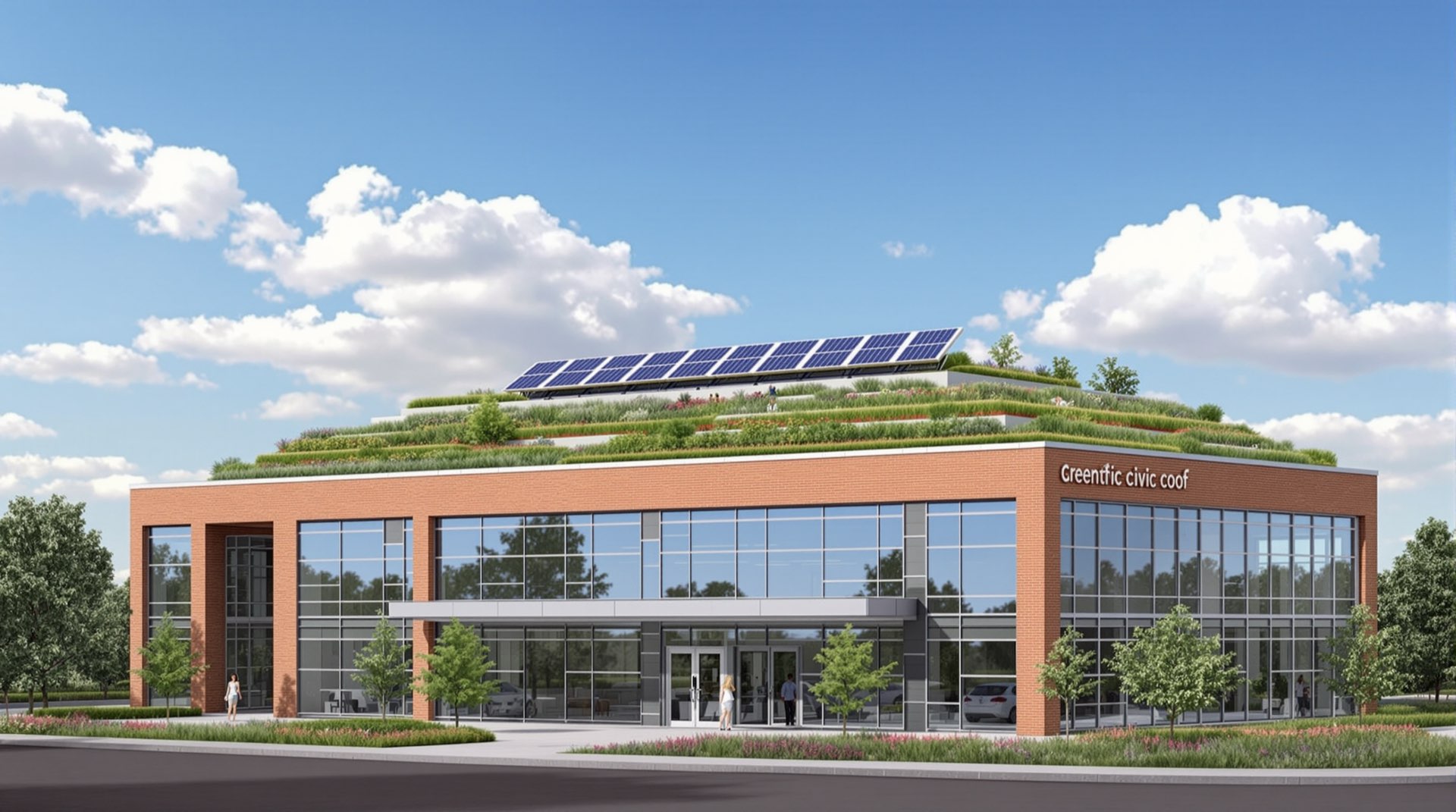
You do not need a plaque to recognize good work. Look for a compact, well-oriented form; generous but well-shaded glass; visible solar or a green roof; native, low-water landscaping; and, if you can find it, published performance data. The tells are subtle once you know them: deep overhangs on the south face, operable windows on a modern office, a cistern beside a downspout, a bike room where a second parking level might have gone. None of these guarantees a great building, but together they signal a team that thought about performance rather than appearance alone.
The best way to learn is to look, repeatedly and critically, at the buildings around you. To understand what you are seeing, start with our design principles and energy-efficiency pages, then place it all in context with the story of green building across the region.